
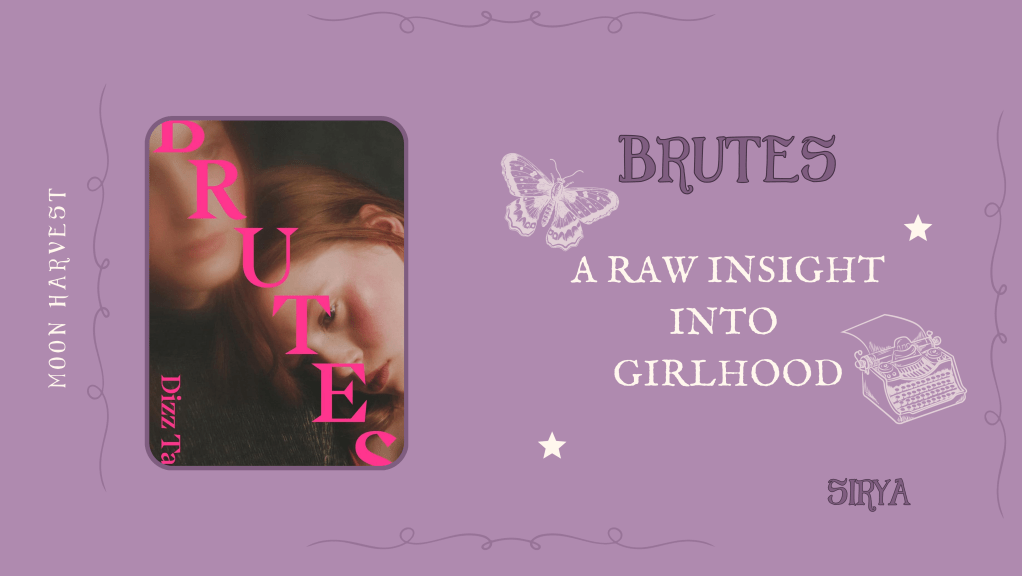

Brutes is a dark, coming-of-age story, the debut novel of author Dizz Tate.
Set in Florida (where the author was raised), the story is told in the collective voice of the plural pronoun we, because the protagonists act and think like they are one inseparable entity, powerful and haunting thanks to their union.
The core event of the story is the disappearance of one of their peers, Sammy, the daughter of a controlling televangelist. Their community is in turmoil, the searches take place between hypocrisy and a question repeated like an incantation throughout the book (“Where is she? Where is she? Where is she?”).
The thread Tate sews between her characters is almost oneiric, their voice pressing and ambiguous, their careless actions aimed at challenging and destroying the innocent portrayal the adults desperately want to paint of them.
Tate does a marvelous job at describing the surrealness and confusion that often accompany teenage years, especially when it comes to underprivileged and guideless youth. The six main characters seem unable to grasp the severity of the events taking place around them, and when it comes to their mothers’ anguish, they appear to interpret such negative feelings as a punishment for being inadequate in their children’s eyes. The disenchantment that comes with realizing your mother is a flawed human being is translated into rage and a lack of empathy toward her.
(“They look desperate, their determination lost. We giggle.”).
The plot thickens when we are given a glimpse of the characters living in adulthood, still struggling to comprehend themselves and others, refusing themselves like they used to reject and despise their mothers. When Tate’s lens goes back to them as young girls, they run wherever the action takes place, wherever there is someone they could envy or someone that could make them enviable, they rehearse infinite dialogues in which they are chosen by the local talent scout to go to Hollywood.
“You’re so pretty” they keep repeating, “You should model,” and they test the adults’ limits and their own, obtaining more disillusion and disappointment as a result. They enter every scene like a pack, tracking the scent of drama and dropping hints that they may know something more, like Shakespeare’s Three Witches in Macbeth (“The weyward Sisters, hand in hand…”).
And just like a pack they abandon those that betray them by being individuals, because individuality is not allowed.
When one of them, Leila, is offered a fishy job as a model, they silently blame her and hate her for being pretty, they suddenly see her as different and exile her.
Leila is then pushed into a lake by Mia (an almost cartoonish mean girl), and they establish she deserves a death sentence for her betrayal. They watch instead of helping as she struggles to survive, living up to the adjective their mothers yell at them: “Brutes,” they repeat, “You are brutes!”
Tate casts her evocative language on the reader like a spell: she mixes eerie elements and atmospheres (a muddy lake hiding secrets, a stone with sharp teeth) to create vivid imagery that drags you into the deep process of trauma as it painfully shapes the young characters’ minds.

As you read, you might wonder if the author could have been kinder to her characters. Friendship at their age is usually the warm balm soothing wounds, whereas in the novel it acts as salt, plastic being fed to angry chicks.
The girls were raised by mothers longing for love and to be chosen, so they fight against the feeling of sharing that same fate, they find themselves tangled in the webs of predators, stuck in situations that will lead to a lifetime of regret and discomfort.
Much is left to the reader’s imagination, the writer invites us to experience the same sense of helplessness and frustration the characters feel, but she does not offer a real solution to the mysteries she narrates of.
What she does offer is her deep understanding of peer influence in adolescence and her ability to enchant through captivating language.
If you enjoy a clear ending, Brutes might not be your cup of tea, but Dizz Tate’s debut remains a gift to all lovers of books that capture human nature with no frills.
 Moon Harvest
Devi effettuare l'accesso per postare un commento.